Canton: A Distributed Ledger for Global Finance
Part 1
Posted on Sun 07 September 2025
| 10 min read
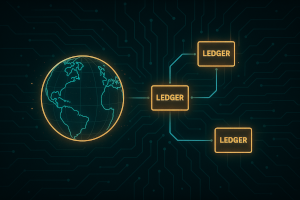
Traditional settlement takes days because banks cannot trust shared state. Canton Network addresses this with domain-based consensus and cryptographic privacy, enabling real-time settlement without sacrificing confidentiality.
Continue reading
Message-Oriented Architectures in Trading Systems: Patterns for Scalability and Fault Tolerance
Part 2
Posted on Sat 20 September 2025
| 23 min read
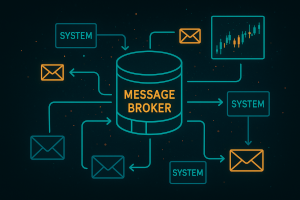
Modern trading systems rely on message-oriented architectures to move market data, orders, and risk events between services with predictable latency. Delivery guarantees, broker architectures, and ordering constraints shape how these systems behave under load.
Continue reading
What Database Scaling Looks Like When Milliseconds Mean Millions
Part 3
Posted on Sat 01 November 2025
| 12 min read
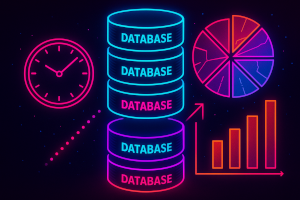
Financial systems process billions of time-series data points with sub-millisecond query requirements: constraints that break traditional databases. Scaling these workloads requires different architectural choices, from vertical scaling to intelligent sharding schemes and specialized layouts for market data.
Continue reading
Observability at Scale: Distributed Telemetry for Modern Trading Infrastructure
Part 4
Posted on Sat 13 December 2025
| 22 min read

How do trading systems observe themselves in real time? This article breaks down the telemetry architecture that keeps distributed systems visible under extreme latency pressure.
Continue reading
The Hidden DAG Behind Every Modern Trading System: How Market Data Is Ingested at Scale
Part 5
Posted on Sat 24 January 2026
| 17 min read
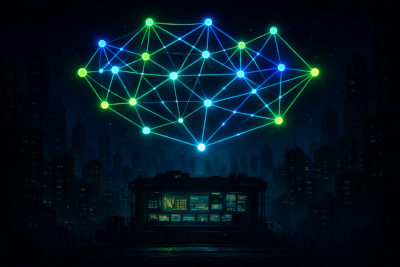
Modern trading systems rely on directed acyclic graphs (DAGs) that branch, merge, and transform real-time feeds into many parallel consumers: matching engines, risk checks, analytics, surveillance, and storage. These ingestion DAGs exist to isolate failure, control fan-out, and preserve latency and correctness under extreme market conditions.
Continue reading
Streaming Under Adversity: Building Systems That Survive Reality
Part 6
Posted on Sat 21 March 2026
| 26 min read
Financial streaming systems must remain correct when reality intervenes. This article dissects crash mid-window recovery, checkpoint corruption, idempotent effects and deterministic replay when failures occur.
Continue reading
Schema Evolution Under Live Order Flow
Part 7
Posted on Sun 12 April 2026
| 14 min read
Schema changes don't roll out atomically in real systems. Old and new versions coexist across services, making backward compatibility and long-term correctness unavoidable constraints.
Continue reading
Zero-Downtime Deployments in Financial Systems: Shipping Code Without Breaking the Market
Part 8
Posted on Sat 22 August 2026
| 27 min read

Financial systems don't get the luxury of downtime. Exchanges, brokers, and trading engines must ship new releases while orders are flowing, positions are changing, and markets are moving, without violating correctness or state.
This article concludes the Distributed Systems in Finance series.
Continue reading